How Long Until 6pm? A Simple Way to Find the Answer
The time left until 6pm equals 6pm minus the current time. If it is 2pm, you have four hours. If it is 4:30pm, you have one hour and 30 minutes. No calculator needed.
Below you’ll find easy formulas, a handy chart, and tips for time zones, daylight saving changes, and late evening cases. Use them to plan your workday, dinner, or commute.
How Long Until 6pm Right Now?
The time left equals 6pm minus the current time. Check your clock, then count forward to 6pm.
Say it is 3:20pm. From 3:20pm to 4:00pm is 40 minutes. From 4:00pm to 6:00pm is two hours. Your total is 2 hours and 40 minutes.
That is the whole method. Everything else is a shortcut.
Most phones, watches, and laptops show the time all day. So a quick glance and a little math usually does the job.
Time Left Until 6pm at a Glance
The chart below shows how many hours remain from common times of day. Use it as a quick reference.
| Current time | Time left until 6pm |
| 6:00am | 12 hours |
| 8:00am | 10 hours |
| 9:00am | 9 hours |
| 10:00am | 8 hours |
| 12:00pm (noon) | 6 hours |
| 1:00pm | 5 hours |
| 2:00pm | 4 hours |
| 3:00pm | 3 hours |
| 4:00pm | 2 hours |
| 5:00pm | 1 hour |
| 5:30pm | 30 minutes |
| 5:45pm | 15 minutes |
Your time falls between two rows? Take the earlier row and subtract the extra minutes. At 2:15pm, you have 3 hours and 45 minutes.
Use the 24 Hour Clock Shortcut
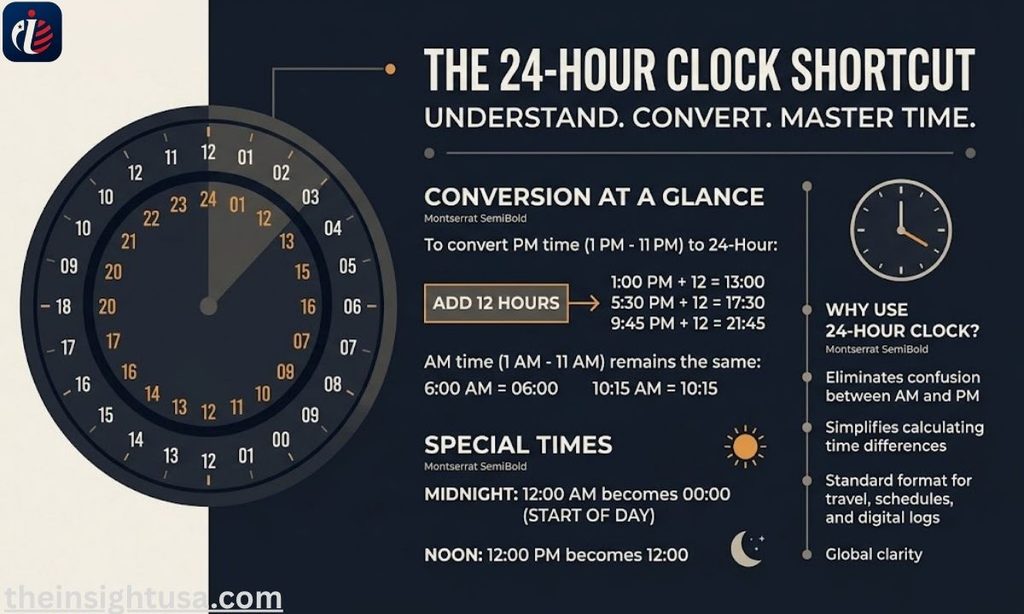
Convert 6pm to 18:00, then subtract your current time from it. The 24 hour clock removes any am and pm confusion.
Here is how it works on whole hours. At 14:00, subtract 14 from 18. You get 4 hours.
When minutes are involved, count to the next hour first. At 15:40, you have 20 minutes until 16:00. Then 2 more hours reach 18:00. The answer is 2 hours and 20 minutes.
This method suits people who already read schedules in military time. Hospitals, airlines, and transport crews often work this way.
Count the Time Step by Step
Count to the next full hour, then count the full hours that remain. This two part approach avoids most slips.
- Note the current time.
- Count the minutes to the next full hour.
- Count the full hours from there to 6pm.
- Add the two results.
Try it at 4:47pm. You need 13 minutes to reach 5:00pm and one hour to reach 6:00pm. Total: 1 hour and 13 minutes.
Try it again at 11:05am. You need 55 minutes to reach noon and six hours to reach 6pm. Total: 6 hours and 55 minutes.
How Many Minutes and Seconds Until 6pm?
Multiply the hours left by 60 for minutes, then by 60 again for seconds. Four hours equals 240 minutes. That equals 14,400 seconds.
Here are some handy conversions:
- 1 hour is 60 minutes or 3,600 seconds
- 2 hours is 120 minutes or 7,200 seconds
- 3 hours is 180 minutes or 10,800 seconds
- 5 hours is 300 minutes or 18,000 seconds
For 6 hours and 55 minutes, convert the hours first. Six hours is 360 minutes. Add 55 and you get 415 minutes.
Read More: How Long Until 2:55? A Simple Guide to Counting the Minutes
Quick Mental Math Tricks
Round to the nearest hour, then adjust for the difference. It is the fastest way to estimate without a pen.
At 2:50pm, round up to 3:00pm. That gives you 3 hours. Now remove the 10 minutes you rounded up. The real answer is 2 hours and 50 minutes.
At 1:10pm, round down to 1:00pm. That gives you 5 hours. Remove 10 minutes from that number. You have 4 hours and 50 minutes.
Another option is counting in chunks of 15 minutes. Four chunks make an hour, and they match the way most clocks are divided.
What Happens If It Is Already Past 6pm?
If it is past 6pm, you are counting to 6pm tomorrow. Subtract the time since 6pm from 24 hours.
At 8:00pm, two hours have passed since 6pm. So 24 minus 2 leaves 22 hours until 6pm tomorrow.
At 11:30pm, five and a half hours have passed. That leaves 18 hours and 30 minutes. You can verify it another way. There are 30 minutes until midnight, then 18 hours to 6pm.
Most people asking this question late at night just want to know how long until the next evening. Now you can answer that too.
How Time Zones Change the Answer
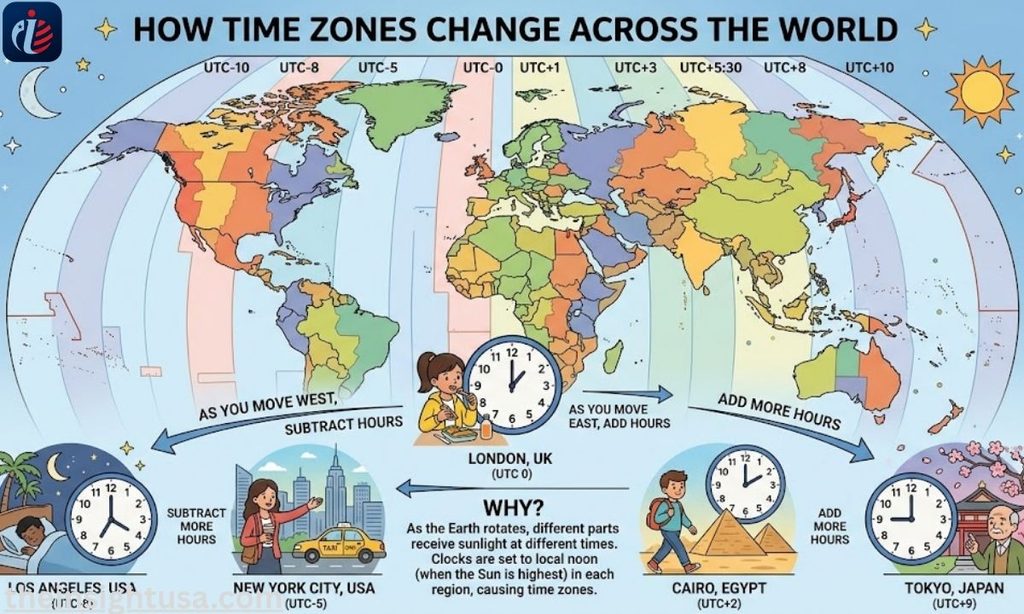
The answer depends on your local time zone, so always count from the clock where you are. Six pm in one city is a different moment in another.
Take two common examples. When it is 6pm in New York, it is 3pm in Los Angeles. When it is 6pm in London, it is 1pm in New York for most of the year.
Before you plan a call or a deadline across regions, run through this list:
- Confirm which time zone the other person means.
- Check if both places use daylight saving.
- Open the world clock on your phone for a side by side view.
Daylight Saving Time
On the day clocks change, your count can be off by one hour. A clock that springs forward skips an hour. A clock that falls back repeats one.
If you are counting across that change, trust your device. It adjusts on its own and shows the true remaining time.
Why 6pm Matters to So Many People
Six pm works as a finish line for several daily routines at once. That is why the question comes up so often.
- Workday end. Many offices wrap up between 5pm and 6pm, so people watch the clock closely.
- Dinner time. Families often plan cooking around a 6pm meal.
- Commute. Evening traffic in many cities peaks close to this hour.
- Closing times. Shops, banks, and some clinics lock up around 6pm.
- Shift changes. Factories and care homes often rotate staff at this time.
- Daylight. In winter, the sun sets before 6pm in many northern places.
Smart Ways to Use the Time Until 6pm
Split the time left into blocks, then give each block one job. A clear plan beats staring at the clock.
- 30 minutes left: Clear your inbox or tidy your desk.
- 1 hour left: Finish one small task and write tomorrow’s list.
- 2 hours left: Handle one medium task with a short break halfway.
- 3 hours left: Fit in six Pomodoro rounds of 25 focused minutes and a 5 minute break.
- 4 hours left: Do real work, then take one snack break. Okay, maybe two.
After school or errands, the same idea works. Count backward from 6pm and mark the leave time.
Fastest Ways to Get an Exact Countdown
Your devices can do the math for you in seconds. Pick the option that fits your habits.
- Ask a voice assistant. Say “how long until 6pm” and it will read the answer aloud.
- Set an alarm. Choose 6:00pm, or 5:45pm if you want time to wrap up.
- Use a timer. Enter the hours and minutes you worked out above.
- Add a calendar event. Set a reminder 30 minutes before 6pm.
- Use a smartwatch. Many models show a countdown right on the watch face.
Common Mistakes and Key Tips
Most errors come from am and pm mix ups or from borrowing an hour the wrong way. A few habits prevent both.
Mistakes to Avoid
- Mixing up noon and midnight. Noon is 12pm. Midnight is 12am.
- Subtracting minutes wrongly. From 3:40pm to 6:00pm is 2 hours and 20 minutes. It is not 2 hours and 40.
- Ignoring time zones. Always ask whose 6pm you mean.
- Forgetting daylight saving. The change day can shift the count by an hour.
Tips That Help
- Set a reminder 30 minutes before 6pm.
- Add a buffer for commutes and traffic.
- Round to the nearest 5 minutes for quick estimates.
- Keep a clock where you can see it.
Frequently Asked Questions
How long until 6pm if it is 1pm?
You have 5 hours. That equals 300 minutes.
How long until 6pm if it is 3:30pm?
You have 2 hours and 30 minutes. That equals 150 minutes.
What is 6pm in 24 hour time?
Six pm is 18:00. Add 12 to any pm hour from 1 to 11 to convert it.
How do I find the time left if it is past 6pm?
Subtract the time since 6pm from 24 hours. At 9pm, you have 21 hours until 6pm tomorrow.
Does daylight saving change how long until 6pm?
Only on the day clocks change, when the gap can shift by one hour. Your device adjusts automatically.
Final Thoughts
So, how long until 6pm? Subtract the current time from 6:00pm and you have the answer. Count to the next hour first, then count the full hours.
The chart, the 24 hour trick, and the rounding method all give the same result. Pick the one that feels easiest. With a little practice, you will know the answer at a glance.

Olivia Bennett is a passionate naming writer who creates unique, meaningful, and creative name ideas for babies, pets, businesses, characters, and more. She enjoys researching name meanings, origins, and trends to help readers find the perfect name with confidence through simple, inspiring, and easy-to-follow guides.